Where Women Sing: Haunting Suffragette Nashville (January 2026)

Updated: Aug 11

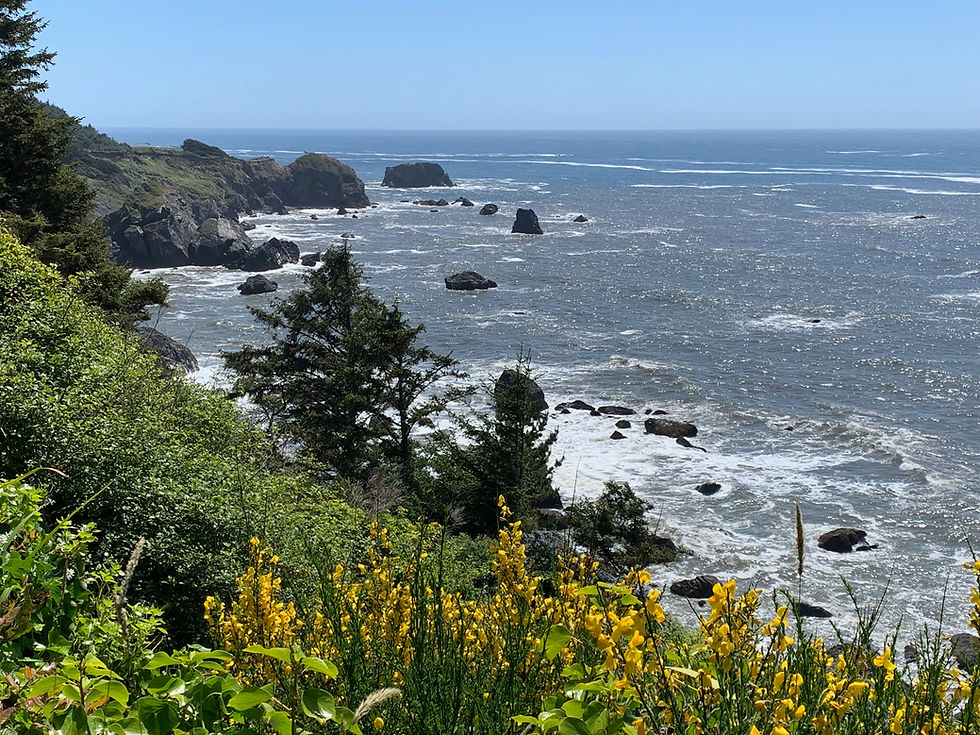
The listening begins on a long drive in November of 2020. Halfway through her final year of high school, my daughter, Morgan, and I travel to the west coast of the United States to visit colleges we won’t have time to travel to in spring. Because it’s during the COVID-19 lockdown, colleges are not officially open for tours, so we explore empty campuses, trying to imagine what they would feel like full of students. Driving from Portland, Oregon, to Tacoma, Washington, we search for radio signals on our rental car dial and land on a country station. Neither of us has listened to country music before, but we’re pulled in by the catchy beats, the simple melodies, and the straightforward storylines that capture complex human struggles. Many of the same songs air repeatedly, so we start to learn the lyrics and sing along, our two new voices intoning ballads that are not our own but that seem written to welcome us into their weave.
We both continue to listen to these songs, Morgan in the south, during her undergraduate years at College of William & Mary, and I at home in the mid-Atlantic. We send one another new songs we hear on the radio, and our collection of favorites grows to a multi-hour list. During Morgan’s final winter break from college, looking toward graduation in May of 2025, it strikes me that taking her to Nashville, the capital of the country music industry, could be a lovely full-circle experience. Our visit offers a first glimpse into the suffragette subset of Nashville musicians—the women demanding and winning the recognition of female voices in yet another male-dominated world.
The Bluebird Café, Discovery 1

Source: https://playthewildcards.com/
On the advice of my nephew, a graduate of Vanderbilt University familiar with Nashville’s music scene, I secure tickets to a show at The Bluebird Café. This legendary venue opened in January of 1982 and helped now well-known artists like Bonnie Raitt, the Indigo Girls, and Taylor Swift get their start. The room accommodates only 50 people, all at little round tables, on high bar stools, or in the small row of church pews near the bar at the back of the café. One of several “listening” rooms in Nashville, The Bluebird requires audience members to refrain from conversation during performances, although the performers themselves often talk with and invite responses from the audience. Artists must play only original songs. The goal is to afford new artists a dedicated venue to share their compositions and the audience an intimate listening experience as these new talents emerge. This reverent mode of attending to sound, of listening deeply to affirm and to learn, prefigures my travels through Highland Perthshire forests—the way I would attend to the song of the wind through the Scottish evergreens rushing in harmony with the water flowing over rocks in the Carie Burn (See "Still Dancing: post)
Before the show, I write to The Wildcards, Ashley Gearing and Andrea Young, pictured above, and ask them if, during their set, they will give a shout-out to Morgan in anticipatory celebration of her upcoming graduation. They do so to introduce a beautiful song they sing about heading out on the road for the first time—a choice full of risk and of possibility. This affirmation of Morgan’s accomplishments and prospects, offered with passion and warmth, is a form of attention and song that welcomes and wishes well.
This duo, I learn later, took their name from a term meant to belittle them: “wildcards” is how the members of the other bands they played for described them. They decided to go it on their own, turning the term used to dismiss them into a positive form of identity as well as a call to action. “Play the wildcards” is the imperative on the t-shirts they sell at their now sold-out Bluebird shows. We buy one for Morgan to affirm these singers and carry their name beyond the walls of the small room full of honoring sound.
While we are in Nashville, we visit Broadway, learn from the exhibits at The Country Music Hall of Fame and the National Museum of African American Music, find Morgan beautiful boots, and eat at The Twelve-Thirty Club and This Bar. Everywhere the spirit of creativity, specifically of song writing and music appreciation, is palpable. But it is the space of The Bluebird and the songs of The Wildcards that haunt me—in all the positive senses of that word. The place is a haunt for these living artists—a place they return to, where they are known. It is also a haunt in the sense of honoring lineages; the singers consistently evoke the names of those who came before, thank them for their care, and call to those who follow. I too begin to haunt these hallowed places, finding and forging throughlines.

Judy Collins at The Ryman
I return to Nashville in February of 2025, this time bringing my husband to see a show at The Ryman, “music’s most iconic stage.” Its current location on Rep. John Lewis Way N. was formerly the Union Gospel Tabernacle, renamed Ryman Auditorium in 1904 after riverboat captain and businessman Thomas G. Ryman. Home to the Grand Ole Opry from 1943 to 1974, the Ryman is also “The Mother Church of Country Music.”
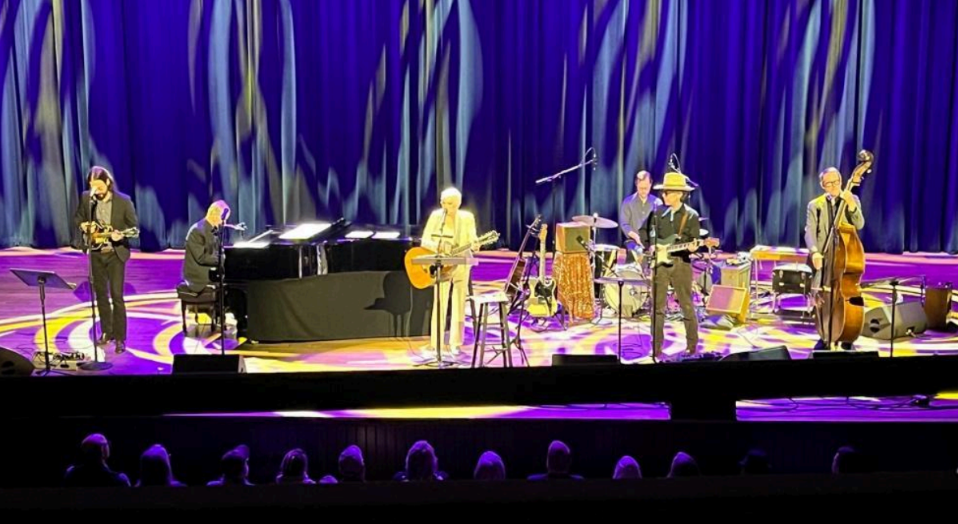
“Judy Collins & Friends” is a celebration of Collins’ 85th birthday. The show features not only her own well-known songs but also original compositions by special guests, including Amanda Shires, Amy Speace, Beth Nielsen Chapman, Miko Marks, and Nicole Atkins. This inclusion is integral to Collins’ long-time support of female artists. For many years she has used the record label she founded, Wildflower Records, to foster a sense of community and sisterhood to give female artists a chance they might otherwise not have. Collins notes that newer songwriters “don’t always know that we were breaking down barriers and working our rears off” when women first tried to make their way in the industry. She explains: “There was a certain amount of sexism because touring was a man’s thing and so a lot of us were on our own but we made a difference while putting our music out there.” (1) Risk. Wildcards. Wildflowers growing in rocky places. These are the ways women turn inhospitable conditions into cultivation.
(1) Quotes from Rich Lopez, 2014, “Judy Collins discovers her place in younger generation of women.”
At 85, Collins still has a pure, clear voice, hitting the high notes that reach into me like light. The Ryman can seat close to 2400 people, and while not every seat is full, every person occupying the two floors of wooden pews sings along with the familiar songs and greets the new artists and their performances with enthusiastic clapping and cheers. I grew up listening to Judy Collins, and her 1967 cover of “Both Sides Now” helped launch the career of my all time favorite singer-songwriter, Joni Mitchell. Sitting in the balcony of The Ryman, listening to Collins’ and her friends’ voices fill that long- and variously revered space, I feel both the
generosity and the fortitude of spirit that has made it possible for women to write and sing, to pen lines that haunt, the way leafless trees and desert expanses and old stones can haunt—at once deeply familiar and strange.
I think of the opening lines of Joni Mitchell’s “For the Roses”—"I heard it in the wind last night, it sounded like applause”—and the equally haunting closing: “It was just the arbutus rustling / And the bumping of the logs / And the moon swept down black water / Like an empty spotlight.”
Performance must be the embodiment of fulfillment, and an empty spotlight full of the ache of absence.

The Bluebird Café, Discovery 2
The same trip that takes me to see Judy Collins at The Ryman includes a return to The Bluebird Café. I purchase tickets without knowing the singer-songwriter, and we are fortunate that it is another inspiring female artist. The General Manager and Chief Operating Officer of The Bluebird, Erika Wollam-Nichols, in the photograph below, reminds the audience of the expectations for listening. In the 2019 documentary Bluebird: An Accidental Landmark That Changed Music History, Wollam-Nichols calls The Bluebird a "sacred" and "intimate" space that acts as a "family" for songwriters. She introduces the featured artist,
Jenny Owen Youngs. We are sitting at a table with two women who have driven some distance to hear Youngs perform. They speak of her not only with great admiration but also in a way that conveys how this songwriter has affirmed their own beings. I learn why when Youngs starts to play. The haunting melody of songs like “Avalanche” carry her pure and equally haunting voice straight into the soul. The first lines of the

chorus make inarticulateness eloquent: “When I try to say the things I can’t, it comes out like an avalanche.” The sound suspends and draws me in a different way from the mountains and cliffs of western Ireland, which felt vertiginous. Here I feel stable, steady, held by Youngs’ attention to naming and being.

Jenny Owen Youngs singing “Avalanche”: from https://www.jennyowenyoungs.com/
The Indigo Girls and Melissa Ethridge at The Ryman
My husband and I return to Nashville in October of 2025 to see three other performers I grew up with. I remember exactly where I was in 1989 the first time I heard “Closer to Fine” and felt that rare flood of gratitude for harmonies that not only haunt but also heal. Hearing Emily Saliers’ and Amy Ray’s voices resonate in The Ryman feels different from hearing Judy Collins’ voice. Collins’ music was part of the soundtrack of my childhood, but The Indigo Girls accompanied me in my 20s. I needed assertions like: “the less I seek my source for some definitive, the closer I am to fine.” But it took a long time to refuse “definitives”— final, conclusive, authoritative meanings that do not admit of doubt, debate, or further development. These women’s voices, and the natural world, invite recognition of various sources of wisdom, rather than assuming and searching for a single one. This recognition was what inspired me forty years later to travel to Scotland, to brave the southwestern desert of the United States, and to listen to the stones of the west of Ireland, embracing them all as haunts.

Jenny Owen Youngs, Emily Saliers, Amy Ray, and Melissa Ethridge all identify as lesbians, and their shows include reflections on navigating the music scene not only as women but also as people striving to find ways to honor themselves and those they love. The country music world is as heteronormative as it is chauvinistic, and as I listen, I feel these multiple weights and also liberations. None of these artists identified as country singers, although all acknowledged and incorporated folk, country, Americana, Appalachian, and country influences into their music. In accepting the Grammy for Best Country Album of 2025, “Cowboy Carter,” Beyoncé said: “I think sometimes genre is a code word to keep us in our place as artists,” and “I just want to encourage people to do what they’re passionate about.” (https://www.youtube.com/watch?v=aGn3HgbqRC8) In the face of racism as well as sexism and genre policing, Beyoncé has persisted, including in the community of her musical representation legendary artists like Dolly Parton and Linda Martell as well as contemporary female performers such as Miley Cyrus, Tanner Adell, Brittney Spencer, Tiera Kennedy, and Reyna Roberts. I think again of Judy Collins’ commitment to fostering community and sisterhood within the male-dominated music industry.
Josee Champoux at Big Jimmy’s
I invite my friend Alice to journey with me to Nashville during our winter break in January 2026. We fashion it as a combination writing retreat, research trip, and music vacation. Our gorgeous Airbnb has soaring ceilings, wood beams, clerestory windows, and beautiful greens and blues woven into blankets and quilts. It’s the ideal space for writing as well as for returning to after venturing downtown. Our first trip is to Broadway and to shops to look at boots. Alice finds a pair of Ariat, founded by Beth Cross and the first company to integrate athletic footwear technology into boots for equestrian athletes. The boots are mostly black, but near the top of their low shaft, they have red and yellow stitching that might be flames or dancers or unfolding wings. Walking down 2nd Ave, we pass Big Jimmy’s Bar & Grill and are
stopped by the sound of a young woman’s voice booming from a speaker set out on the sidewalk. We listen for a few minutes, and then decide to go inside. Josee Champoux is, according to Chartmetric, “a powerhouse singer-songwriter hailing from the north shore of Nova Scotia, where the rugged landscape mirrors the raw soul of her music.” I take the photo to the right in the mirror of the bar, capturing the pedestrian bridge over the Cumberland River through the window behind.

Champoux invites requests, and while she doesn’t know “Angel from Montgomery,” which we ask for, she does a beautiful version of Stevie Nicks’ “Landslide.” I read the description of Champoux’s music only after hearing her, and I remember Jamaica Kincaid’s words about how the landscape one is born into defines one’s identity and also one’s sense of what is beautiful. This in turn makes me think of the possibilities for re-understanding the self, as I did in relation to trees, sands, and stones, both channeling the self of my earlier years and discerning new sensibilities.

In the early morning hours, separate from our current writing project, as I take the photo to the left of the half moon behind the bare Nashville tree branches, Alice rereads my three previous photo-journal meditations on my journeys to Scotland, New Mexico, and Ireland. She hears resonances across the pieces that I had not previously discerned—
themes of time, relationship, and what she names “spiritual companionship.” Her read of these meditations affirms the community of composition we share, not songs set to music but rather songs in prose, born of careful individual attention and shaped through both listening and dialogue. This community of composition across time, space, and genre is inspired and informed by Mary Oliver’s belief that “always there is something worth saying, / about glory, about gratitude...” (Mary Oliver, 2025, “Mockingbird,” Little Alleluias, p. 63).
The images below are of the designs on the mugs out of which Alice and I drink coffee and tea, respectively, each morning. The branching lines on the glazed clay and the natural colors evoke the colors of landscapes to which I risked traveling, and how we hold them in our hands becomes a reminder and a haunting of where women sing.

The Bluebird Café, Discovery 3
Late on our second day in Nashville, after an almost full day of writing, Alice and I head to The Bluebird. Almost exactly a year after I heard them with Morgan, sitting at a small table in the very front, I listen again to The Wildcards, this time from the back of the venue. Alice and I perch on the bar stools and watch not only the singers but also the warm exchange of words before and after, and the reverent silence during, each song.

It is at this session that The Wildcards explain how they got their name—how they took a diminishment and turned it into a source of strength and connection between them and to others. They surrendered the one story of wisdom, the definitive, and instead risked pursuing their passion.
Song Suffragettes at The Listening Room
Our last stop is at The Listening Room for Song Suffragettes—a one-hour weekly acoustic showcase featuring five up-and-coming female artists. It is the only all-women showcase, a collective of female singer-songwriters, Jada Watson explains, who stand together in the face of systemic gender disparity in the music industry (https://songdata.ca/wp-content/uploads/2019/04/SongData-Watson-Country-Airplay-Study-FullReport-April2019.pdf)
The original suffragettes, Wikipedia explains, were led by Emmeline Pankhurst, who founded the Women's Social and Political Union in 1903 in England. Pankhurst and her daughters, Christabel and Sylvia, fought for women's right to vote using “deeds not words.” The term “suffragette” was coined to belittle these fighters, distinguishing them from earlier “suffragists.” The story The Wildcards tell, of reclaiming a derisive term as one of empowerment, is a theme in the story of suffragette Nashville, nowhere embodied more fully than through Song Suffragettes. Alice and I again sit on high stools near the bar, order a salad and drinks, and settle in to listen to these women sing songs of celebration and pain, of loss of love and self-discovery.

Each voice is distinctive, its own sound, sensibility, sense of purpose. While there are some men in the audience, it is primarily female. The atmosphere is one of women gathering to share with one another without having to be “the surveyed female” (John Berger, 1972, Ways of Seeing)—not, in this moment, seeing themselves as men see and hear them but as they see and hear themselves. It feels as though we can listen and breathe easier, letting the power of the words and the sweetness of the melodies wash over us, in a space without monitoring.
While the room feels womb-like, the songs evoke that male gaze and effort to control that reigns beyond the room, most notably Abby Callahan’s “Simon Says.” In listening to these songs of pain and possibility, Alice marvels at “the way a song's articulation of painful experience has helped me recognize and make a home for my own.”
There are other reminders of the struggle to have one’s voice heard, like the artists’ description of the unpredictable rhythm of waiting to have their songs picked up, or not, and recorded, or not, by well-established voices that will get them recognized. Not everyone is as reverent as Luke Combs, whose 2023 recording of Tracy Chapman’s 1986 song “Fast Car” honors her haunting voice and lyrics and compensates her monetarily since she owns the rights to the song, but it is also a painful reminder that a white man needs to record a black woman’s song to draw the attention it deserves.

The final song the Song Suffragettes sing is “Landslide,” played often in Nashville, I learn, because of its themes of personal reflection and change. Each suffragette sings a segment of the song, inflecting it with her own style. The effect is a kind of harmony, not as simultaneously sounded musical notes but rather as a single continuous narrative text—harmony over the time and space of the song and over its history of having been sung by so many suffragettes.
“Can I sail through the changing ocean tides?
Can I handle the season of my life?” ~ Stevie Nicks, 1973, “Landslide”
Song suffragettes within and beyond Nashville seem to suggest that singing and songwriting—with and for one another—is one way to manage such navigation, to sail.
On our last morning, Alice and I go to the Ariat store in downtown Nashville, and I buy boots that match the ones she bought on our first day. I love that this boot company was started and run by a woman for 30 years—as long as I have been working at Bryn Mawr College. I love the stitching that suggests flames or dancers or wings that remind me to leap and to fly. I love that Alice and I share these beauties.

I return to my own “song” writing at home. These are not compositions to be literally sung, although there are lyrics and rhythms in what I write, and there is structure and harmony not in simultaneously struck chords but in echoes over time. I will keep listening to song suffragettes just as I keep writing and seeking spiritual companionship with other writers and different kinds of inscribers—root and branch, wind and water.
Note: Source of first photo of road from Seattle to Portland: https://quirkytravelguy.com/seattle-portland-drive-road-trip-stops/